
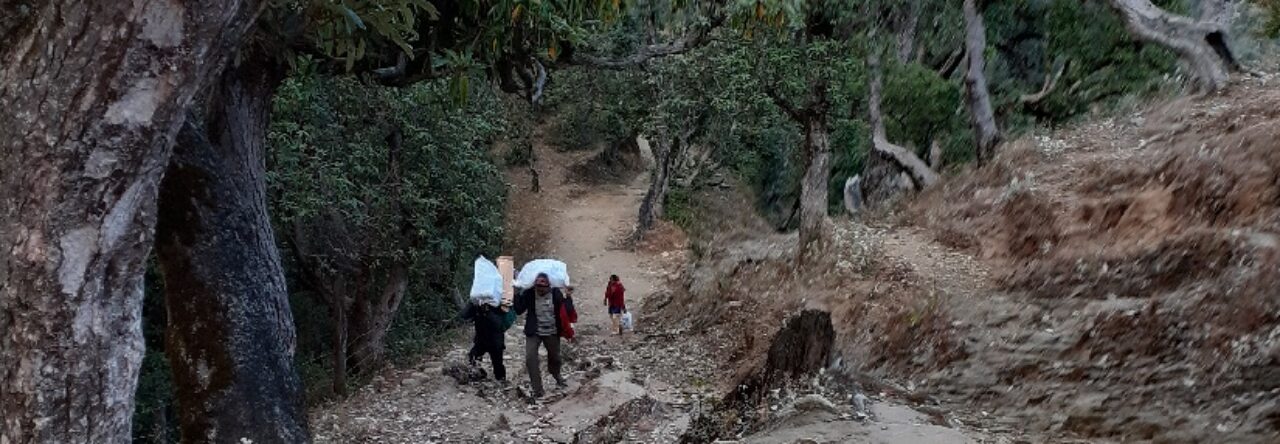
Realistic Experience of an Explorer

trek route

Tag: Rishikesh

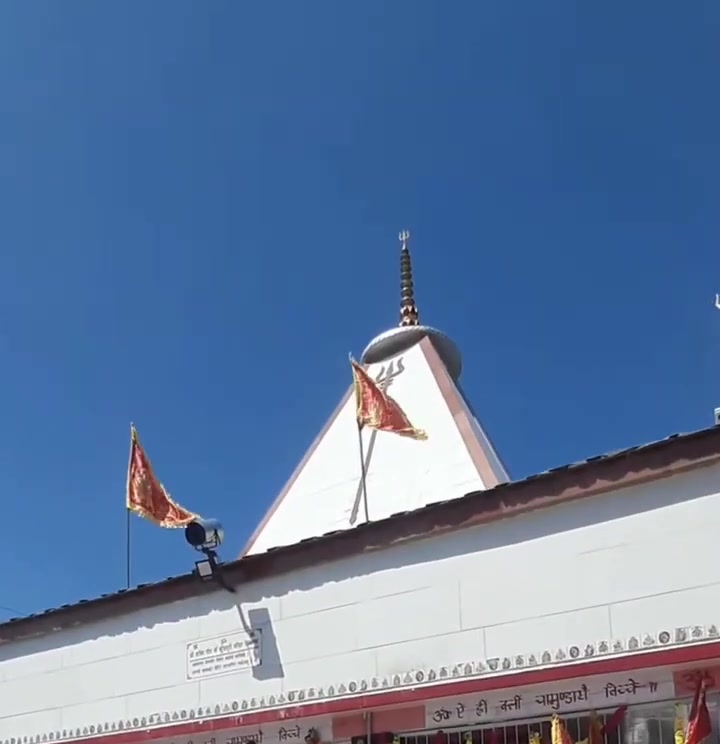
Kunjapuri Temple near Rishikesh with saffron flags

Kunjapuri Temple near Rishikesh: How to Reach, Legend & Sunrise Guide

Kunjapuri Temple is one of the easiest and most rewarding hilltop temples to visit from Dehradun and Rishikesh. Perched at about 1,600 metres above Narendra Nagar, this shrine of Goddess Kunjapuri Devi is one of the revered Shakti Peeths of Uttarakhand, and it is famous for sunrise views over the snow peaks of the Garhwal Himalaya and the Bhagirathi valley. Here is our complete, step-by-step guide to getting there and what to expect.
Kunjapuri Temple near Rishikesh with saffron flags
The white shikhara of Kunjapuri Devi Temple

Kunjapuri Temple at a Glance

  • Deity: Goddess Kunjapuri Devi, a form of Goddess Durga
  • Altitude: about 1,600 m (the Uttarakhand Tourism board at the top reads 1,573 m)
  • Location: above Narendra Nagar, Tehri Garhwal district, Uttarakhand
  • Distance: about 25 km by road from Rishikesh and around 70 km from Dehradun
  • Steps: around 300 steps from the parking area to the shrine
  • Best time: October to March for clear Himalayan views; go early for the sunrise
  • Busiest days: Navratri, when thousands of devotees visit

The Legend of Kunjapuri Devi

According to the information board at the temple, Kunjapuri is one of the Siddha Peeths established in the region by Jagadguru Shankaracharya. Legend says that when Goddess Sati gave up her life in the yajna of her father Daksha, Lord Shiva carried her body back towards Kailash. Wherever parts of her body fell, a Shakti Peeth arose. The upper half of Sati’s body is believed to have fallen here, and the temple of Kunjapuri Devi stands at that spot. Together with Surkanda Devi and Chandrabadni, Kunjapuri forms a sacred triangle of Shakti Peeths in Tehri district.

How to Reach Kunjapuri Temple: Step by Step

Step 1: Dehradun to Rishikesh (about 45 km)

Drive or take a bus from Dehradun to Rishikesh via Doiwala. The road is wide and easy, and the drive takes about an hour.
Forest road to Kunjapuri Temple via Narendra Nagar
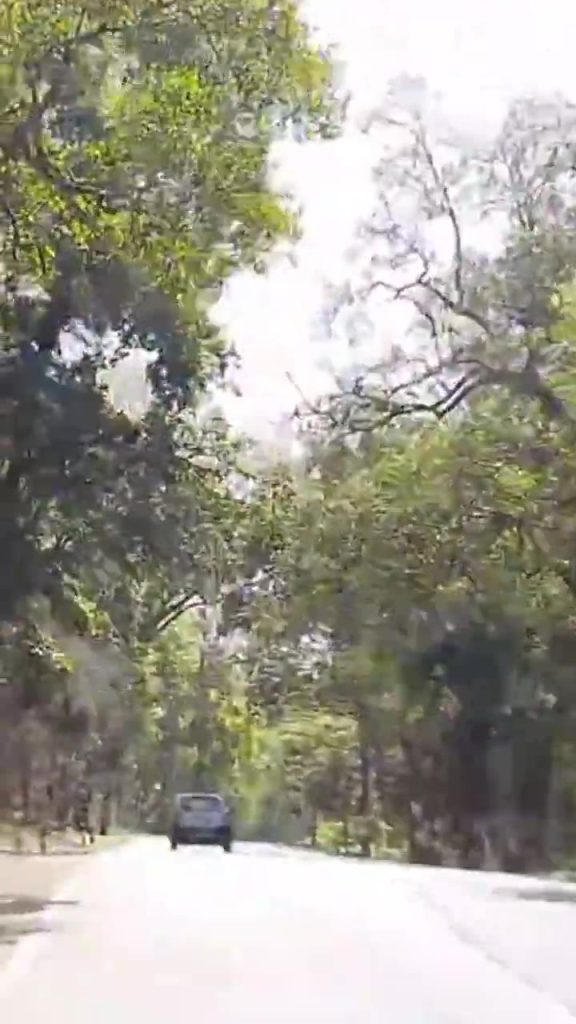
The forest road climbing towards Narendra Nagar

Step 2: Rishikesh to Narendra Nagar

From Rishikesh, take the Rishikesh–Chamba highway (towards New Tehri) and climb up to Narendra Nagar. The road winds through sal and pine forest with views back over the Ganga valley.
Bridge on the way to Kunjapuri Temple
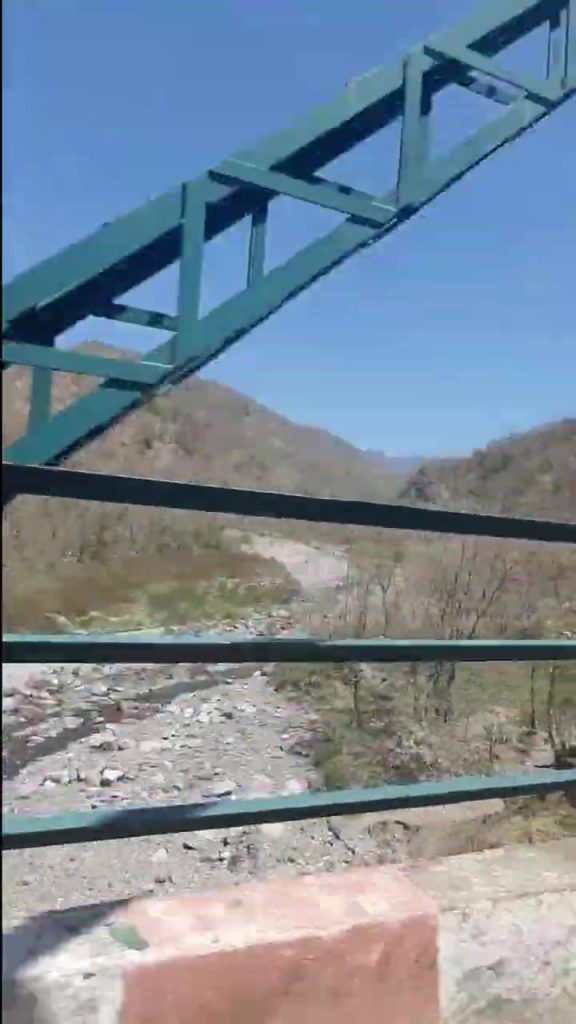
Crossing a river bed on the drive up

Step 3: Turn off for Kunjapuri at Hindolakhal

Beyond Narendra Nagar, look for the Kunjapuri road turning off the highway near Hindolakhal. Follow it up to the temple parking area. The last stretch is a narrow hill road with sharp bends, so drive slowly and use your horn on blind corners.

Step 4: Park, buy prasad and climb the steps

At the base you will find parking and small shops selling prasad, chunri and flowers for the goddess. From here, around 300 steps lead up to the shrine. Take them slowly and stop on the way to enjoy the views.
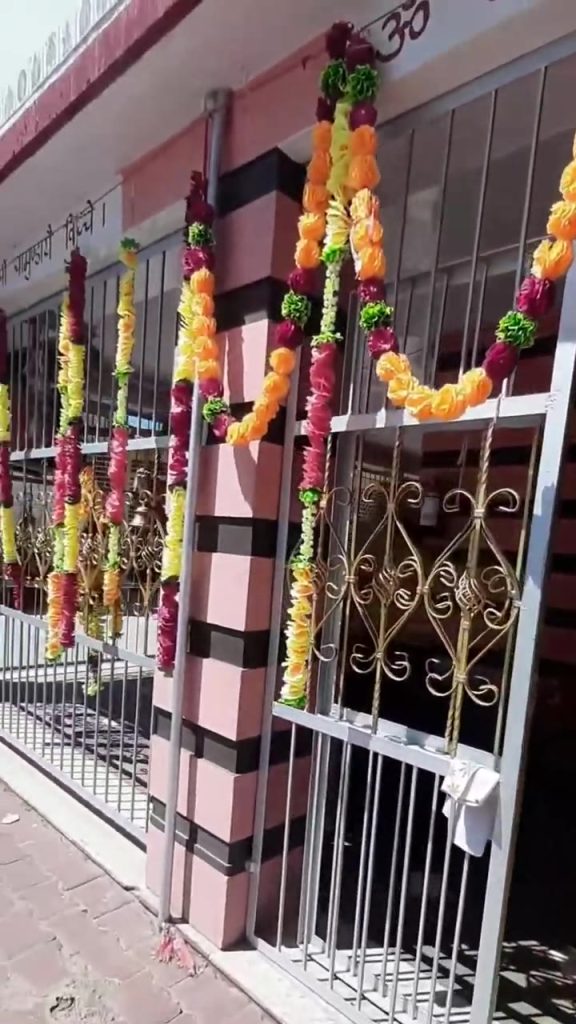
Marigold garlands at the Kunjapuri Devi temple gate
Marigold garlands at the temple gate

Other ways to get there

  • Taxi: shared and private taxis run from Rishikesh; a private cab is the easiest option for the sunrise.
  • Trek: a forest trail of about 5 km climbs from Hindolakhal village to the temple, and longer sunrise treks start from the Tapovan side of Rishikesh.
  • Nearest airport: Jolly Grant Airport, Dehradun.
  • Nearest railway station: Rishikesh.
Uttarakhand Tourism board showing Kunjapuri Temple altitude
The Uttarakhand Tourism board at the top: 1,573 m

What You Will See at the Top

The temple courtyard opens onto a ridge with a sweeping view in almost every direction. On clear mornings you can see the snow-covered peaks of the Garhwal Himalaya on one side, and the Bhagirathi valley and the plains around Rishikesh and Haridwar on the other. Red and gold flags of the goddess flutter along the railing, and benches along the edge make it a lovely place to sit after darshan.
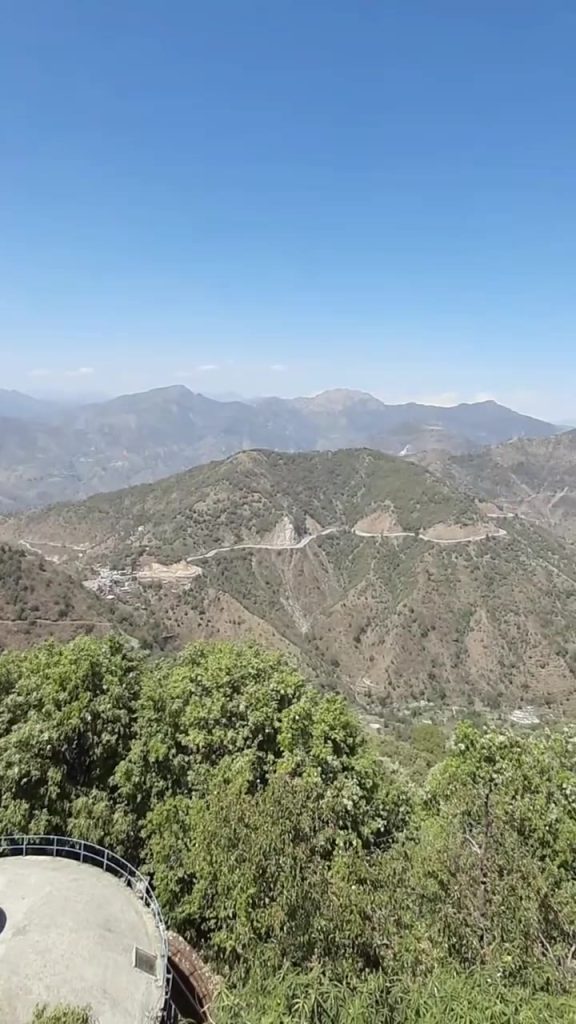
View of the Garhwal hills from Kunjapuri Temple
The view over the Garhwal hills from the temple

Travel Tips for Kunjapuri Temple

  • Leave Rishikesh by about 5 am if you want to catch the sunrise from the top.
  • Carry a light jacket; mornings on the ridge are cold even in spring.
  • Carry water and a few snacks, and keep some cash for prasad and parking.
  • Avoid the monsoon months if you can, when the hill road and trail can be slippery.
  • Combine your trip with other hilltop shrines near Dehradun, such as Matogi Shiva Temple and Bhadraj Temple.
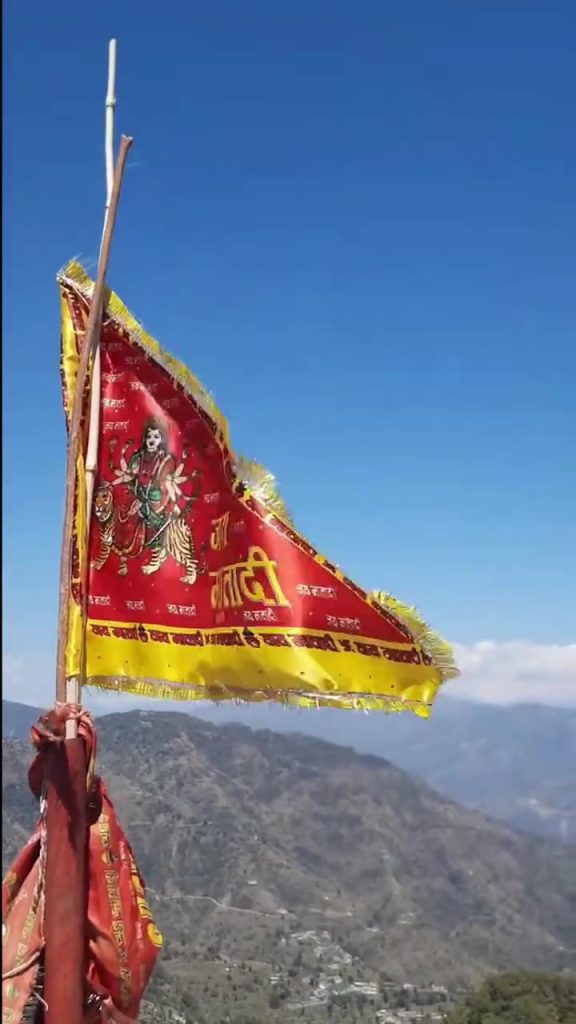
Flags of Kunjapuri Devi above the Bhagirathi valley
Flags of the goddess above the valley

What to Carry for Kunjapuri Temple

As an Amazon Associate I earn from qualifying purchases.

Watch: Our Guided Trip to Kunjapuri Temple

Watch the Reel on Instagram @dehraduni1.

Kunjapuri Temple: Frequently Asked Questions

How far is Kunjapuri Temple from Rishikesh?

Kunjapuri Temple is about 25 km by road from Rishikesh, via Narendra Nagar and Hindolakhal. The drive takes around an hour.

How far is Kunjapuri Temple from Dehradun?

It is around 70 km from Dehradun via Rishikesh, a drive of about two to two and a half hours.

How many steps are there at Kunjapuri Temple?

There are around 300 steps from the parking area to the shrine.

Why is Kunjapuri Temple famous?

Kunjapuri is a revered Shakti Peeth where the upper half of Goddess Sati’s body is believed to have fallen. It is also famous for sunrise views of the Himalayan snow peaks.

What is the best time to visit Kunjapuri Temple?

October to March offers the clearest skies. Go early in the morning for the sunrise, and expect large crowds during Navratri.

Trip to Paithani Rahu Temple : A Journey Through the Himalayas

The Paithani Rahu Temple in Pauri Garhwal is one of the very few temples in India dedicated to Rahu. Here is our one-day road trip from Dehradun, with the route, timings and honest tips for your own visit.

Trip to Paithani Rahu Temple : A Journey Through the Himalayas

Trip to Paithani (Garhwal)
Last week, my mother, brother, Yolo (our Labrador), and I embarked on a trip to Paithani in our car. Paithani is famous for its ancient ‘Rahu’ temple, nestled in the midst of the majestic Himalayan mountains. The journey was exhilarating, as we passed through ancient towns and villages, soaking in the serene beauty of the region.

Start

We started our journey just before 10:00 AM from our home on the outskirts of Dehradun, carrying a packed lunch for all of us. By around 1:00 PM, we reached Rishikesh, the ancient city and yoga capital of the world. From here, the road ascends into the higher Himalayas. The picturesque journey was breathtaking, with the mighty Ganga River flowing alongside the highway. Our journey followed the river upstream.
Before reaching Byasi, my mother and I treated ourselves to kulfi. Yolo, our adorable Labrador, always gazes at me longingly whenever I eat something, as if he’s missing out on a tasty treat—so, of course, I shared a bit of my kulfi with him.

 Trip to Paithani Rahu Temple : Midway

As we captured the beauty of the Himalayan roads on my iPhone, we decided to stop near Shivpuri, a village famous for its world-renowned white-water rafting. We unpacked our lunch and enjoyed the scenic surroundings. Before resuming our journey, we took Yolo for a short walk, as he tends to feel uncomfortable after sitting for long hours in the car.
Our route took us through Devprayag, the lowest of the five ‘Prayags’ (sacred river confluences), where the Bhagirathi and Alaknanda Rivers merge to form the Ganga. Upstream, the river is called ‘Bhagirathi’ when flowing from Gaumukh and Gangotri until Devprayag, while the river flowing down from Badrinath is known as ‘Alaknanda.’
From Devprayag, we took a right turn from the Badrinath Highway to head toward Pauri (5,951 ft). The road to Pauri winds through pine-covered forests, offering mesmerizing views of the snow-capped Himalayan peaks. The region is sparsely populated, and the well-maintained roads make for a pleasant drive.

Trip to Paithani Rahu Temple

Paithani

Located at an altitude of 1,503 ft, Paithani lies in a valley. After passing through Pauri and Paubo, we reached Paithani around 7:45 PM. By then, most of the market had closed, and villagers were retiring for the night. Finding a suitable hotel was challenging, as two out of the three available hotels refused to accommodate Yolo. Left with no choice, we settled for the third option, which, like the others, was quite basic.
Paithani is known for frequent leopard sightings at night. Villagers go to bed early due to the fear of these predators, which often come near the village in search of small animals and calves. Occasionally, even Himalayan black bears descend from the higher mountains. Given the lack of good accommodations in Paithani, it is advisable to stay 4 km before the village, where a better hotel is available near a petrol pump.
Unfortunately, Paithani village itself is quite unclean, with garbage strewn across its streets. The village head should take urgent action to maintain cleanliness, especially since Paithani also serves as a market hub for smaller surrounding villages. However, the temple area was relatively clean.
The Rahu Temple is located across a bridge. According to legend, Adi Shankaracharya, the great spiritual guru of the 8th century, sensed strong Rahu vibrations while passing through Paithani on his way to Badrinath. He discovered a sacred rock in the river beside the Lord Shiva temple, which is now revered as the Rahu temple. The Rahu rock is massive, and devotees light 18 earthen oil lamps here to seek relief from Rahu’s influence. This tradition has been followed for over 1,200 years. Ideal place for Rahu Shanti. 
After offering our prayers, we returned to our car for the journey back.

One of the most disturbing things we learned from the villagers was that there were no dogs left in Paithani. Every single dog in the village had been killed and eaten by leopards. The villagers spoke about it with an almost casual acceptance, even saying that it was good because the barking of dogs at night was irritating. I was completely taken aback by this attitude. Dogs are our most faithful companions, always standing by humans with unconditional love.

Yet here, these people seemed to favor the predators over their own loyal protectors.
It was disheartening to hear them justify this, as if the presence of leopards was more natural and acceptable than having dogs in their village. I couldn’t help but think—if it were their human loved ones being hunted, would they still speak this way? Would they still dismiss the loss so casually? It felt cold-hearted and deeply unsettling. Looking at Yolo, I felt even more grateful for his presence, knowing how much love and loyalty he brings into our lives.

Pauri

On our way back, we took a brief stop at the Pauri Cantonment bypass to take in the stunning views and click a few pictures near the ancient Kandoliya Temple. The town of Pauri, from the outside, appears well-maintained and clean. Along the way, I collected some pine cones as souvenirs.

Devprayag

We were well past lunchtime by the time we found a place to eat. Surprisingly, despite Garhwal Himalayas being known as Devbhoomi (God’s Land), most of the eateries along the route served non-vegetarian food.

Only along the Chardham Highway—which connects Rishikesh to the sacred shrines of Badrinath and Kedarnath—did we find an abundance of vegetarian restaurants.
At the Dhaba (Restaurant) where we stopped, the owner was so impressed by Yolo’s gentle behavior that he asked if Yolo had fathered any puppies, as he wished to adopt one. This made us feel even prouder of our adorable companion!

Return

Driving in the hills requires caution, so I maintained a steady speed.

We reached home around 11:00 PM, ending our short yet fulfilling pilgrimage. After a light meal, we finally rested.
Despite the challenging terrain, our Skoda performed remarkably well, delivering an impressive fuel average of 18.9 kmpl—even after multiple uphill and downhill stretches.
Above all, my mother was delighted to have had the Rahu darshan, which was the primary reason for our trip. Seeing her happy made the journey all the more meaningful.

———————————————————————————————–

Would I visit Paithani again? Probably not. The temple was interesting, but the village itself needs serious improvement. The lack of cleanliness, limited accommodation options, and eerie silence at night weren’t exactly inviting.

But would I go on another Himalayan road trip? Absolutely!

The drive through Devprayag, the quiet roads near Pauri, and even the little moments—like sharing kulfi with Yolo—made this trip truly special.


Paithani Rahu Temple

Paithani Rahu Temple: Quick Travel Guide

  • Route: Dehradun – Rishikesh – Shivpuri – Devprayag – Pauri – Paithani.
  • Driving time: about 9–10 hours one way with stops; start early.
  • Where to stay: basic hotels only; the better option is about 4 km before the village near the petrol pump. Pet owners should call ahead.
  • Ritual: devotees light 18 earthen oil lamps at the Rahu rock for Rahu Shanti.
  • Food: vegetarian dhabas are easiest to find on the Char Dham highway.

Plan your drive with the Uttarakhand Tourism website, and read our Chardham Yatra guide if you want to continue towards Badrinath.

Road Trip Essentials for Paithani

As an Amazon Associate I earn from qualifying purchases.

Paithani Rahu Temple: Frequently Asked Questions

Where is the Paithani Rahu Temple?

It is in Paithani village in Pauri Garhwal district, Uttarakhand, across a bridge beside an ancient Shiva temple.

What is the legend of the Paithani Rahu Temple?

Local belief says Adi Shankaracharya sensed strong Rahu vibrations here on his way to Badrinath and identified the sacred rock that is worshipped today.

Can you visit the Paithani Rahu Temple in one day from Dehradun?

Yes, but it is a long drive. Leave by early morning, or stay overnight near Paithani to enjoy the journey without rushing.